
The Selfish Gene
Darwin's theory of evolution and natural selection is reaffirmed, but at what scale is the evolution happening?
Non-Fiction Science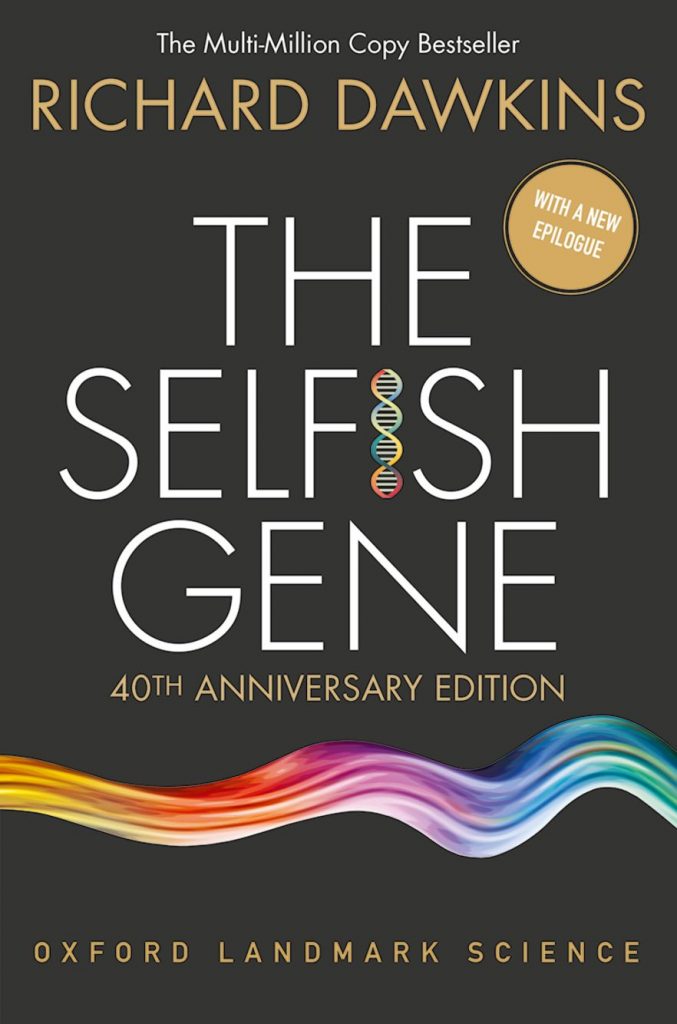
Evolution is reframed and examined from the perspective of genes rather than organisms. Genes are the fundamental units of natural selection, persisting because they are good at replicating themselves. Organisms are merely “survival machines” constructed by genes to ensure their own propagation, and the apparent altruism of individuals can often be explained as strategies that ultimately increase a gene’s inclusive fitness.
A central concept introduced is inclusive fitness, which extends the idea of reproductive success to include the survival of genetically related individuals. This explains behaviors such as kin selection, where an animal may sacrifice its own chances of survival to help relatives who share many of its genes.
The “selfishness” of the gene alluded to in the title does not indicate a moral shortcoming, but rather that the gene is driven by blind encoding to propagate and copy themselves, which they do at any cost, including possibly harm for their host organism.
An excellent and thought-provoking read, and the origin of a number of phrases used in common parlance, like “meme”.