Titian (Tiziano Vecelli)
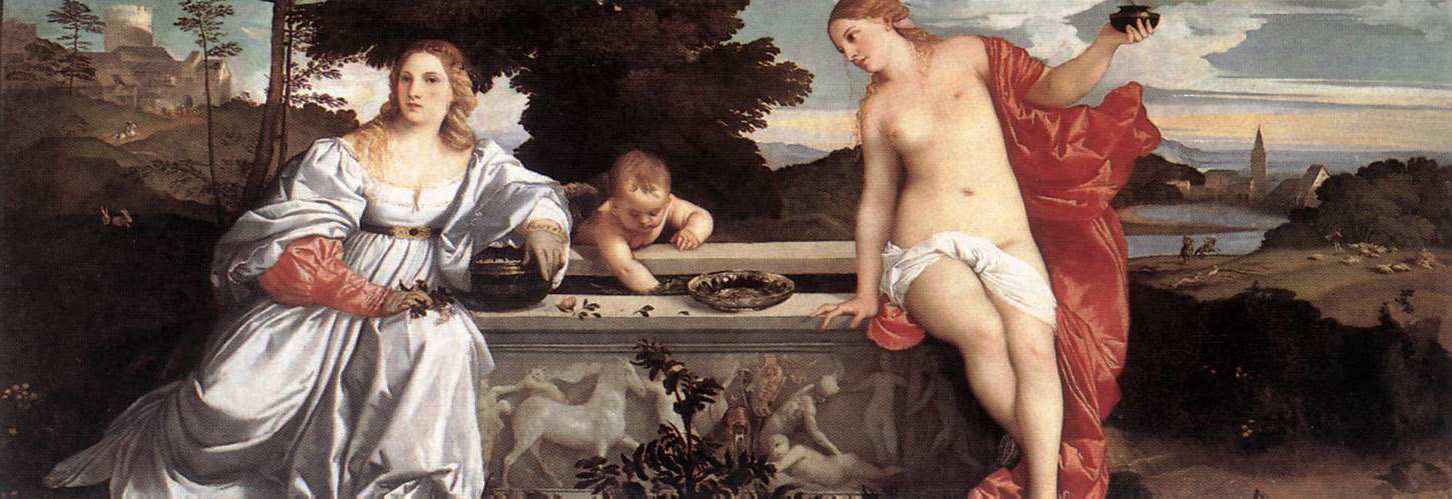
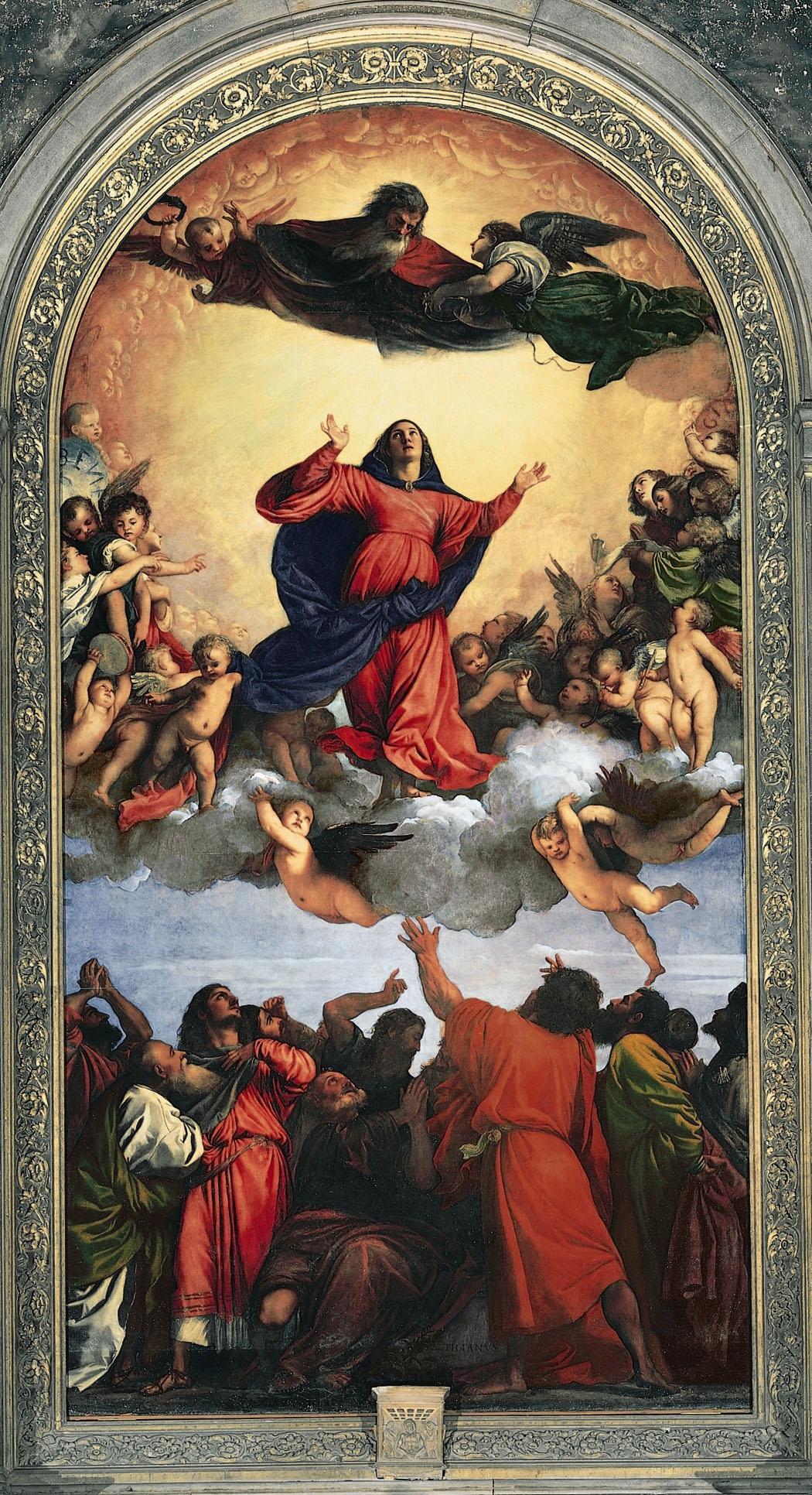
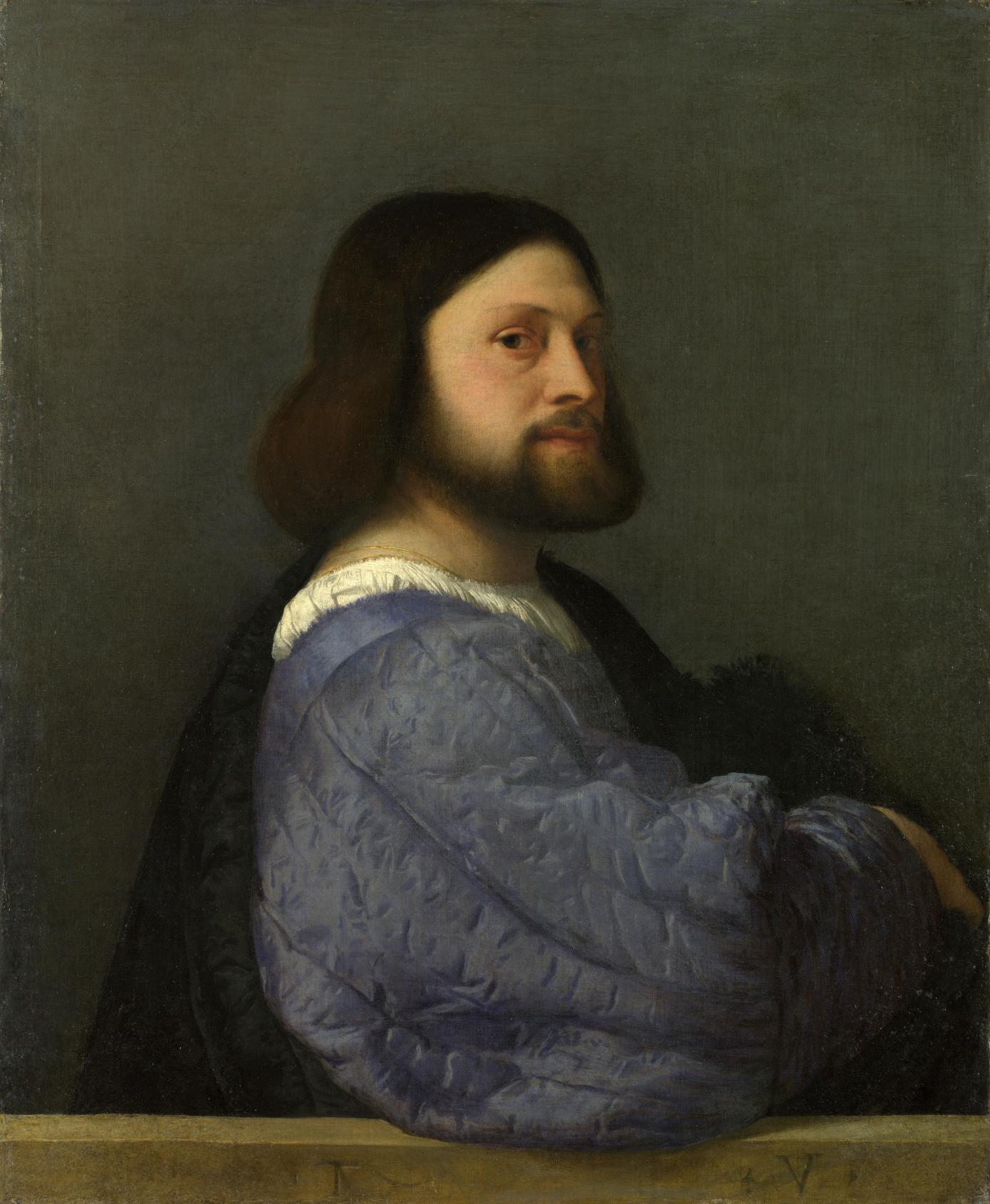
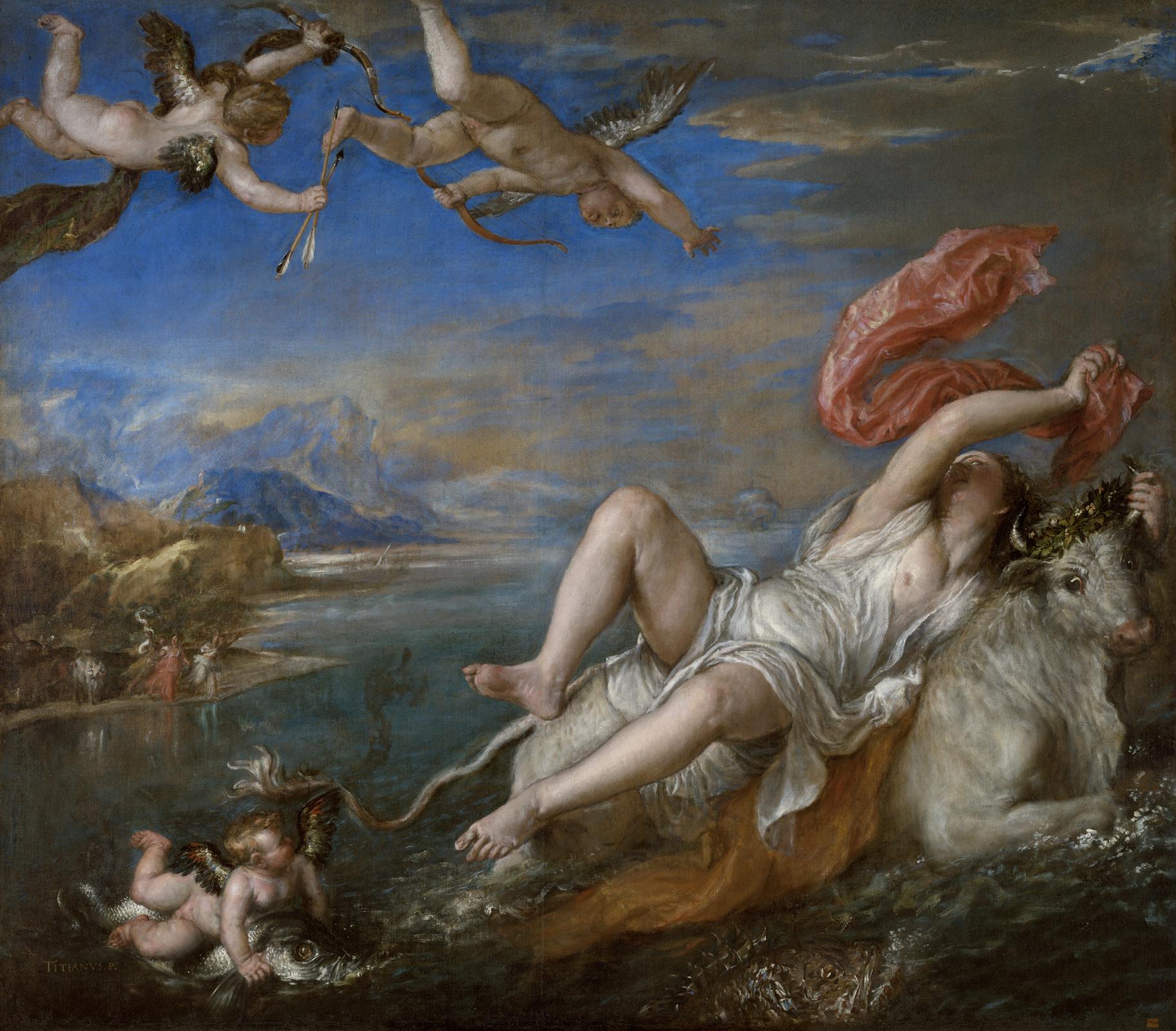
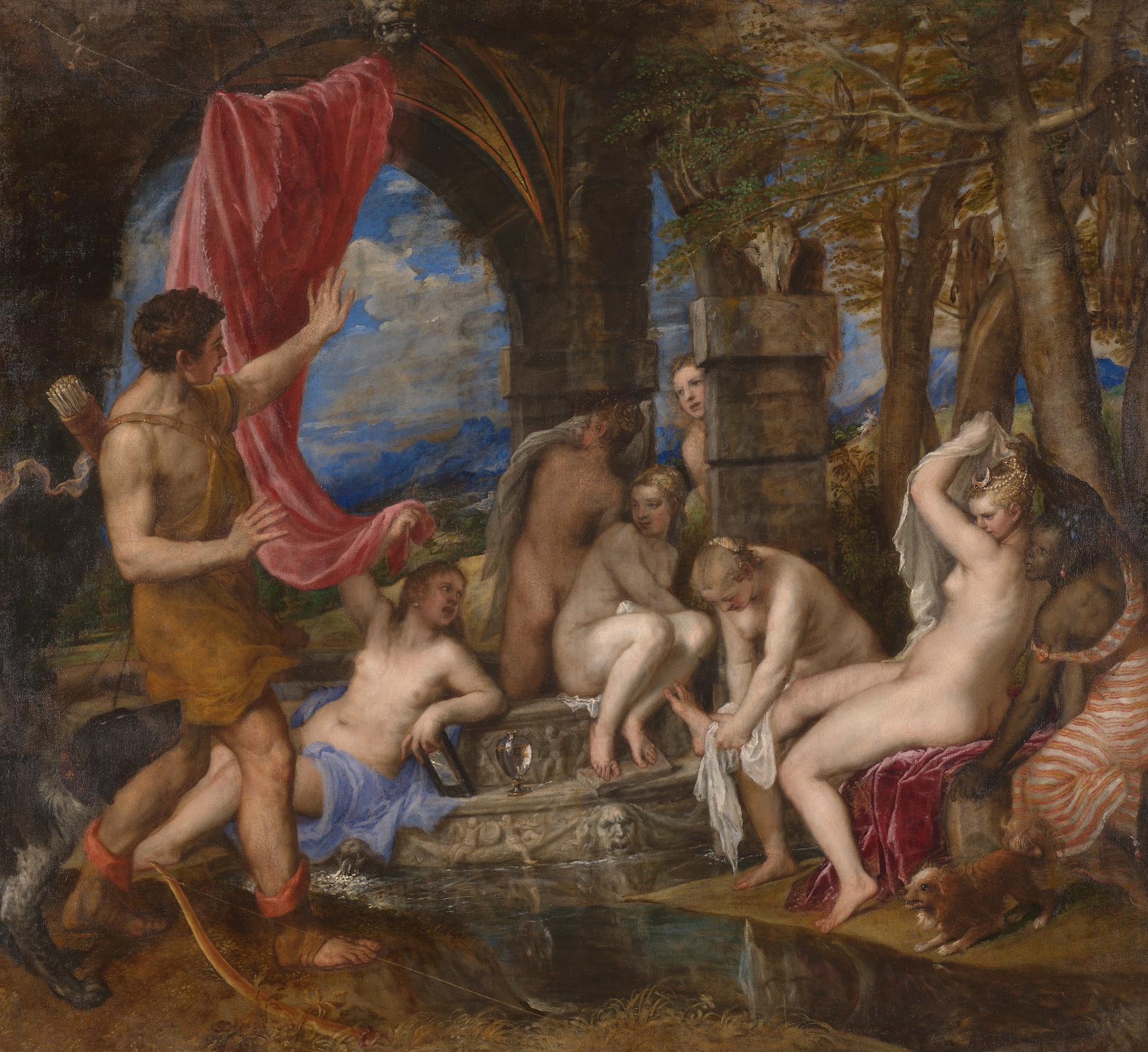
Titian was one of the most celebrated and prolific painters in history. Trained under the renowned Giovanni Bellini in Venice, Titian’s artistic expertise flourished upon Bellini’s passing in 1516. The Venetian Republic promptly appointed him as its official painter, cementing his status as a leading figure in European art throughout the sixteenth century. Throughout his illustrious career, Titian held commissions from some of Europe’s most influential patrons, including the ducal families of Ferrara and Mantua, Francis I of France, Philip II of Spain, Charles V, Holy Roman Emperor, and Pope Paul III, who elevated him to the rank of Count Palatine. From his meticulously organized atelier in Venice, Titian produced an astonishing number of works — approximately seven thousand paintings — that spanned altarpieces, portraits, and mythological scenes, many of which showcased the female form in all its beauty.
His work exhibits a love of the dramatic and a radiant confidence and enjoyment of life. ‘Life through coloured light’ is the phrase often used to describe the glittering paintings of Titian. He helped to establish oil-paint as a widely accepted medium, and his colours are exceptionally rich and glowing. He applied them in free expansive brush strokes, sometimes using his fingers for the final touches.
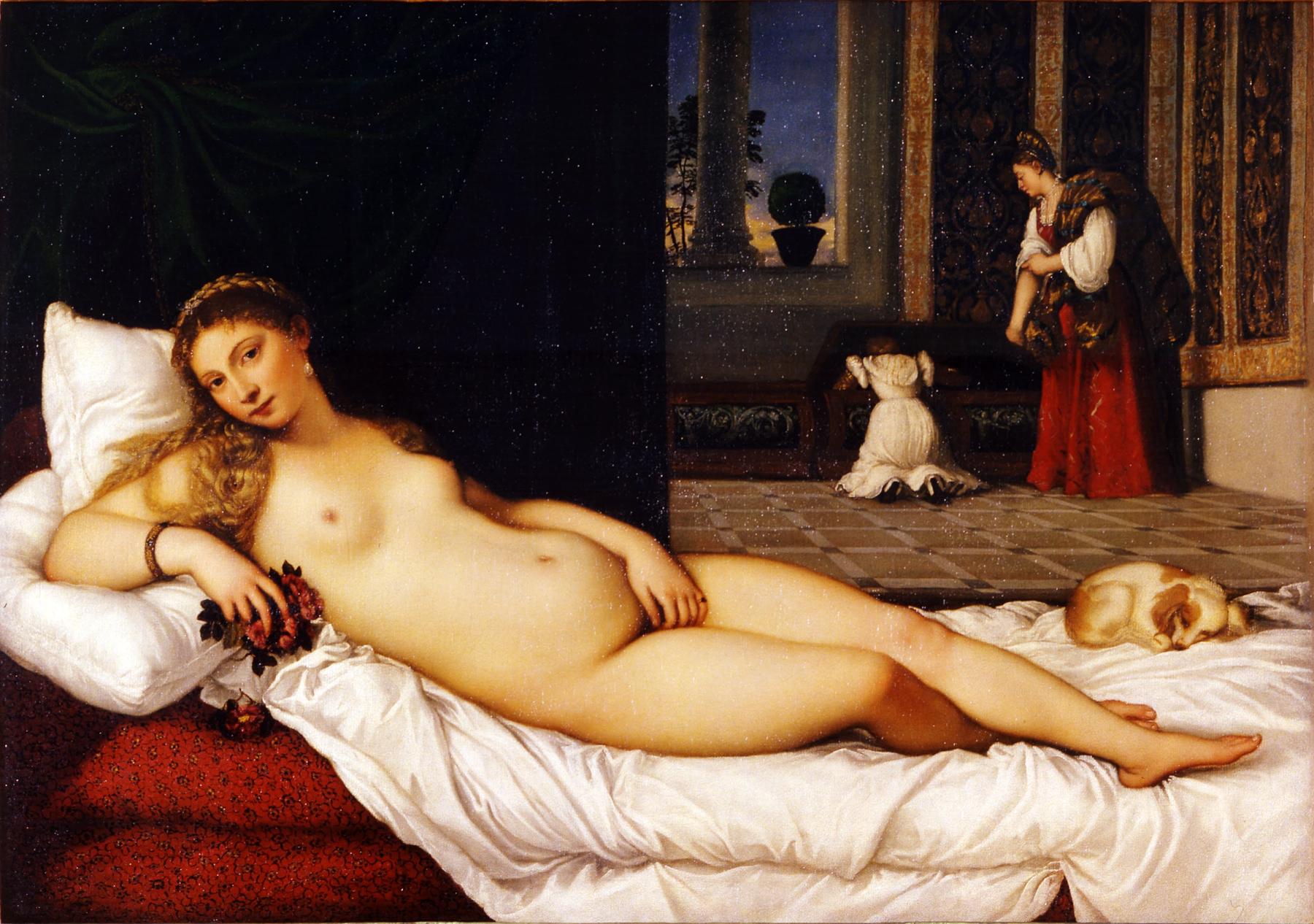 Titian painted this Venus for the Duke of Urbino, hence its name. The painting
is reminiscent of a pagan altarpiece: it worships female sexuality, and
presents the goddess of love as an earthly woman, aware of her beauty and the
physical pleasures of life.
Titian painted this Venus for the Duke of Urbino, hence its name. The painting
is reminiscent of a pagan altarpiece: it worships female sexuality, and
presents the goddess of love as an earthly woman, aware of her beauty and the
physical pleasures of life.
The warm glow of her skin is enhanced by the gold and cream tints in the sheet and pillows of her couch, by her brown eyes, and her ‘titian’ hair falling in waves on to her shoulders. (This particular shade of red-gold hair appeared so often in Titian’s paintings that it was named after him.) A crystal earring catches the light against her cheek. In her right hand she holds some small red roses, the flowers of love associated with Venus; in ancient legend roses originally were white, and became red when they were stained by her blood. Her left hand covers her groin, in the traditional pose. The expression in her dark almond-shaped eyes and curving lips is both provocative and knowing, as if she is confident of the power of her sexual attraction.
The emerald green curtain behind her acts as a cool dark foil to her skin, and its soft folds accentuate the voluptuous lines of her body. This deep green and the red of the roses and the couch are picked up in the colours of the background scene, where two maidservants are putting away their mistress’s clothes for the night.
The light of a summer evening floods into the room, picking out the sheen on rich materials, the designs on the elaborately decorated chests and the tapestries on the walls. The maids, chests, tapestries, and little dog curled up asleep on the couch, fill the painting with interest; they also balance the long angled line of the naked goddess in the foreground, and provide a contrasting activity to her languorous pose.
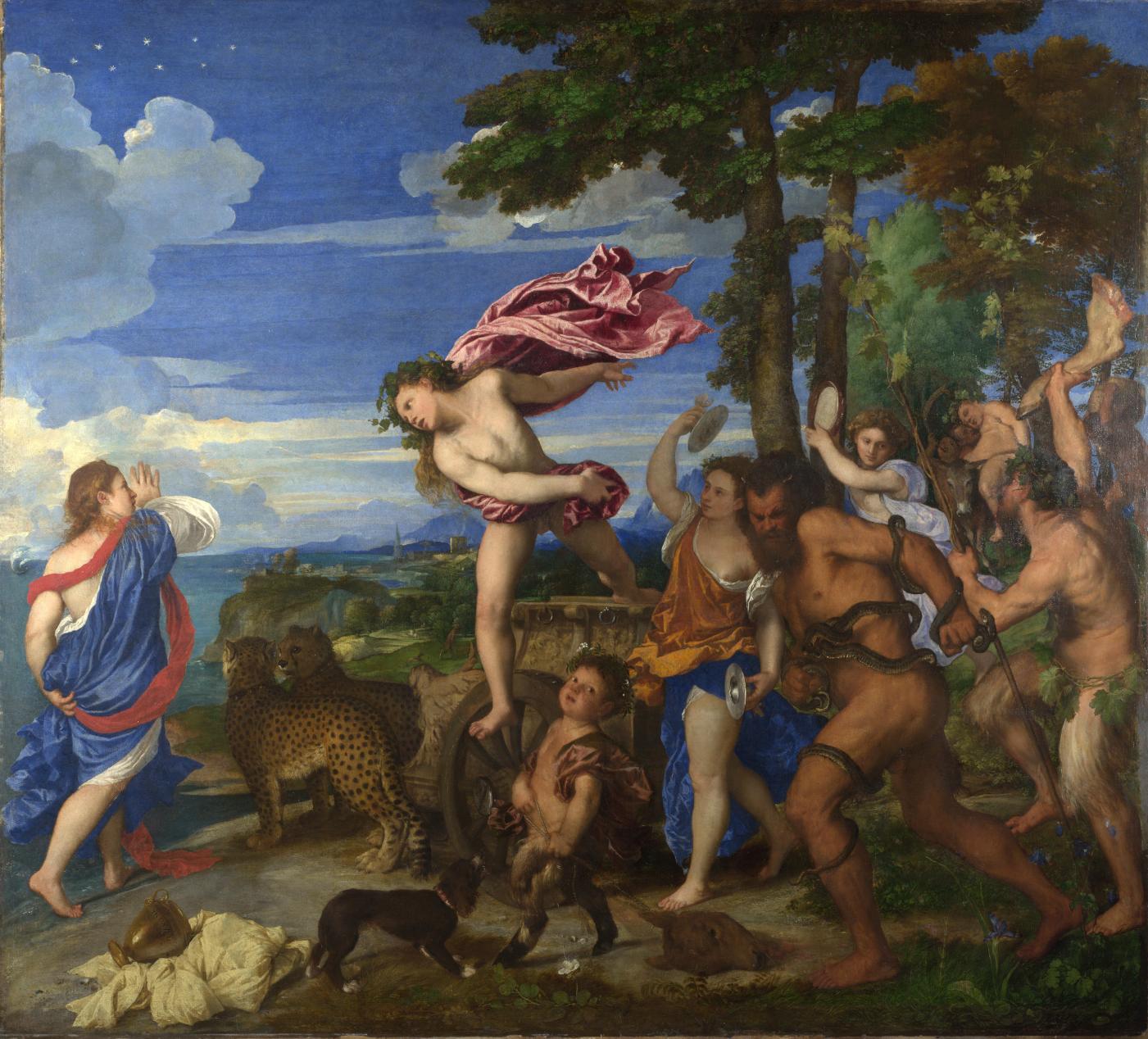 This is one of three mythological paintings painted for the Duke of Ferrara’s
studiolo painted between 1518 and 1525. For this picture, Titian first painted
the background in full. Each foreground figure was then filled in over a
silhouette of white ground, for the richest colour effect. His palette included
most of the pigments known to the workshops of the day. The composition of the
painting is very complex but so skillfully accomplished that every detail of
the story unfolds smoothly as the eye travels round.
This is one of three mythological paintings painted for the Duke of Ferrara’s
studiolo painted between 1518 and 1525. For this picture, Titian first painted
the background in full. Each foreground figure was then filled in over a
silhouette of white ground, for the richest colour effect. His palette included
most of the pigments known to the workshops of the day. The composition of the
painting is very complex but so skillfully accomplished that every detail of
the story unfolds smoothly as the eye travels round.
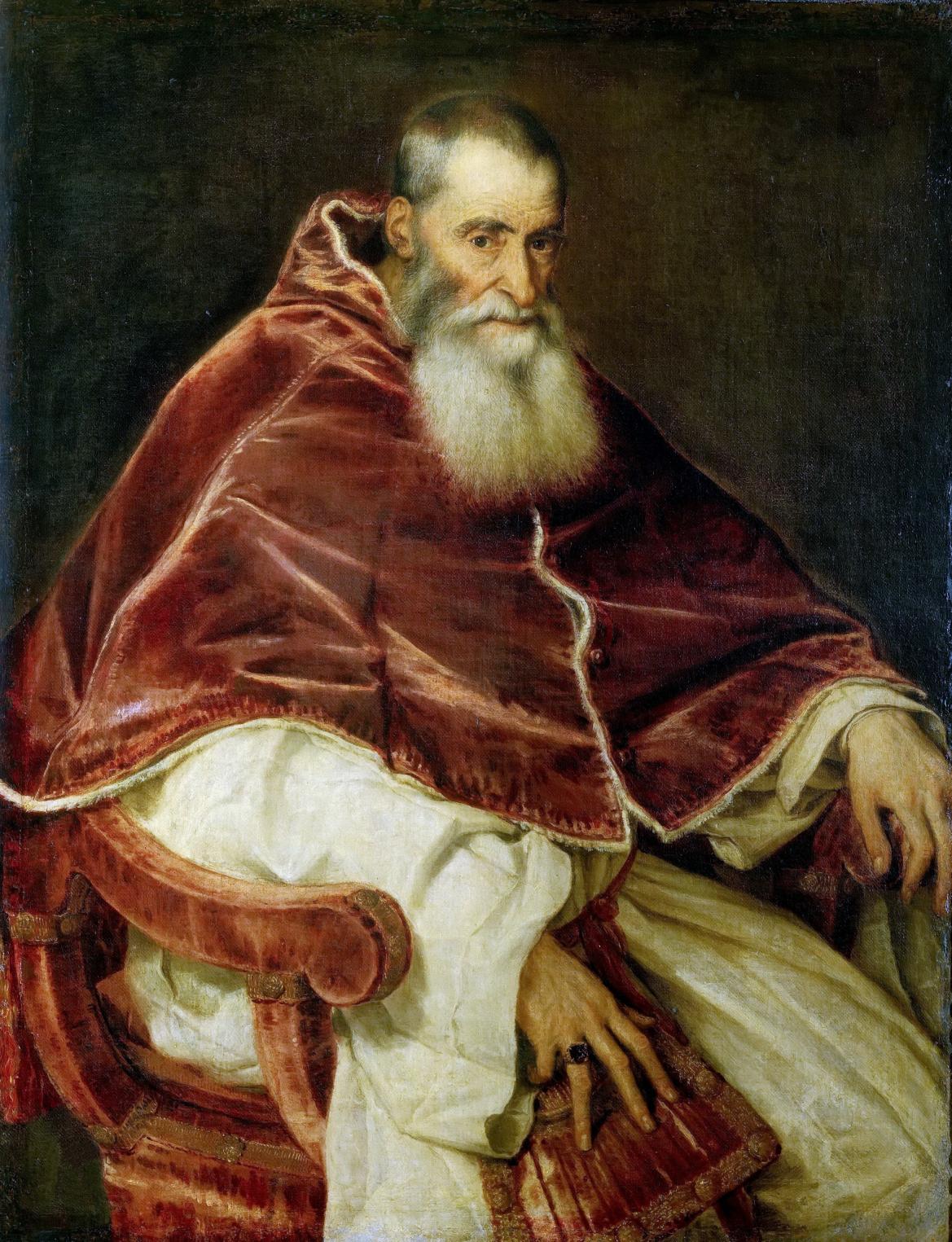 Pope Paul III, the last of the renaissance popes and a veteran policitian. He
was seventy-five at the time Titian painted this portrait, a patron of the arts
and also a reformer who later summoned the Council of Trent. This was the Pope
responsible for excommnicating King Henry VIII of England from the Roman
Catholic church, leading to the establishment of the Anglican church.
Pope Paul III, the last of the renaissance popes and a veteran policitian. He
was seventy-five at the time Titian painted this portrait, a patron of the arts
and also a reformer who later summoned the Council of Trent. This was the Pope
responsible for excommnicating King Henry VIII of England from the Roman
Catholic church, leading to the establishment of the Anglican church.
Gallery of Paintings